
The Problem Called Plastic
(Yes, It’s STILL a Thing)

Plastic has become so woven into our daily lives, it’s almost invisible. Grocery run? Too often we reach for a single-use plastic bag. Need a hydrate while strolling? Most of us carry a plastic water bottle. Sitting at a café? That straw is probably plastic, too. The plastic habit remains stubbornly strong—even as we better grasp just how harmful it is.

Not Even Cosmetics Are Safe
You’d think cosmetics would be the exception in our plastic-laden world. Sad truth: they're not. Research by the Plastic Soup Foundation found that 87% of leading cosmetics and personal care products contain microplastics—tiny plastic particles often invisible to the naked eye. These are sometimes also called microbeads, and yes, they're still very present.

Microplastics: They’re Everywhere
From ocean depths to the Arctic tundra, microplastics now reside in food, soil, water—and in our blood. These particles don’t degrade—they just hang around, wreaking slow but steady havoc. Unless they’re incinerated (creating a different kind of mess), the plastic you used decades ago may still be swimming around somewhere.

The Health Fallout (Spoiler: It’s Not Pretty)
Emerging science is painting a frightening picture—microplastics may trigger inflammation, disrupt hormone balance, harm reproductive health, weaken gut barriers, and even accumulate in organs like lungs, liver, and arteries.
Microplastics can also act like toxic sponges, ferrying metals and other contaminants deep into our bodies. Some scientists even link airborne microplastics to infertility, colon cancer, and lung issues.
In short? The science is still evolving, but the red flags are numerous and cannot be ignored.
Microplastics in Toothpaste: The Least “Minty Fresh” Surprise

Why in Toothpaste?
Microplastics sneak their way into toothpaste—for cheap—it’s that simple. They act as abrasive scrubbers or fillers and are cheaper than safer, natural alternatives. Yet despite industry promises to phase them out, many brands still use them—even now.
The Industry Still Slips
Global bans like the U.S. Microbead-Free Waters Act (2015) prohibit plastic microbeads in rinse-off products—including toothpaste—since mid‑2017. But loopholes and global inconsistencies mean microplastics still appear in many markets, and “rinse-off” standards vary—leaving gaps where microplastics can persist. For example, the Regulation (EU) 2023/2055 under REACH still allows the use of microplastics in rinse-off products like toothpastes until 2027.
And despite voluntary promises, scans through the Beat the Microbead database confirm microplastics remain widespread in oral care.
The Toothpaste Index (Yes, It’s Ridiculous)

Here are some of the most commonly scanned toothpaste products with the ‘Beat the microbead app’ from the Plastic Soup Foundation that still contain microplastics:
Aquafresh Fresh Mint
Prodent Cool Mint
Zendium Classic
Prodent Anti‑Tartar
Aquafresh Tartar Control 3‑in‑1
Prodent Fresh Gel
Oral‑B Pro‑Expert Intense Clean
Prodent Arctic Fresh Whitener
Aquafresh Intense White
Sensodyne Gentle Whitening
These are the leading brands worldwide. If the biggest names still slip in microplastics—especially where consumers expect better—what about the rest?
We Won’t Let This Slide

What You Can Do
Products may still be caught in a plastic loop—but you don’t have to be:
- Become a savvy shopper. Use the Beat the Microbead app or read ingredient lists for “polyethylene,” “polypropylene,” or “polymethyl methacrylate” (PMMA)—common plastic markers.
- Choose wisely. Look for brands that are transparent, use natural scrubbers (like silica, baking soda, or charcoal), and avoid microplastics.
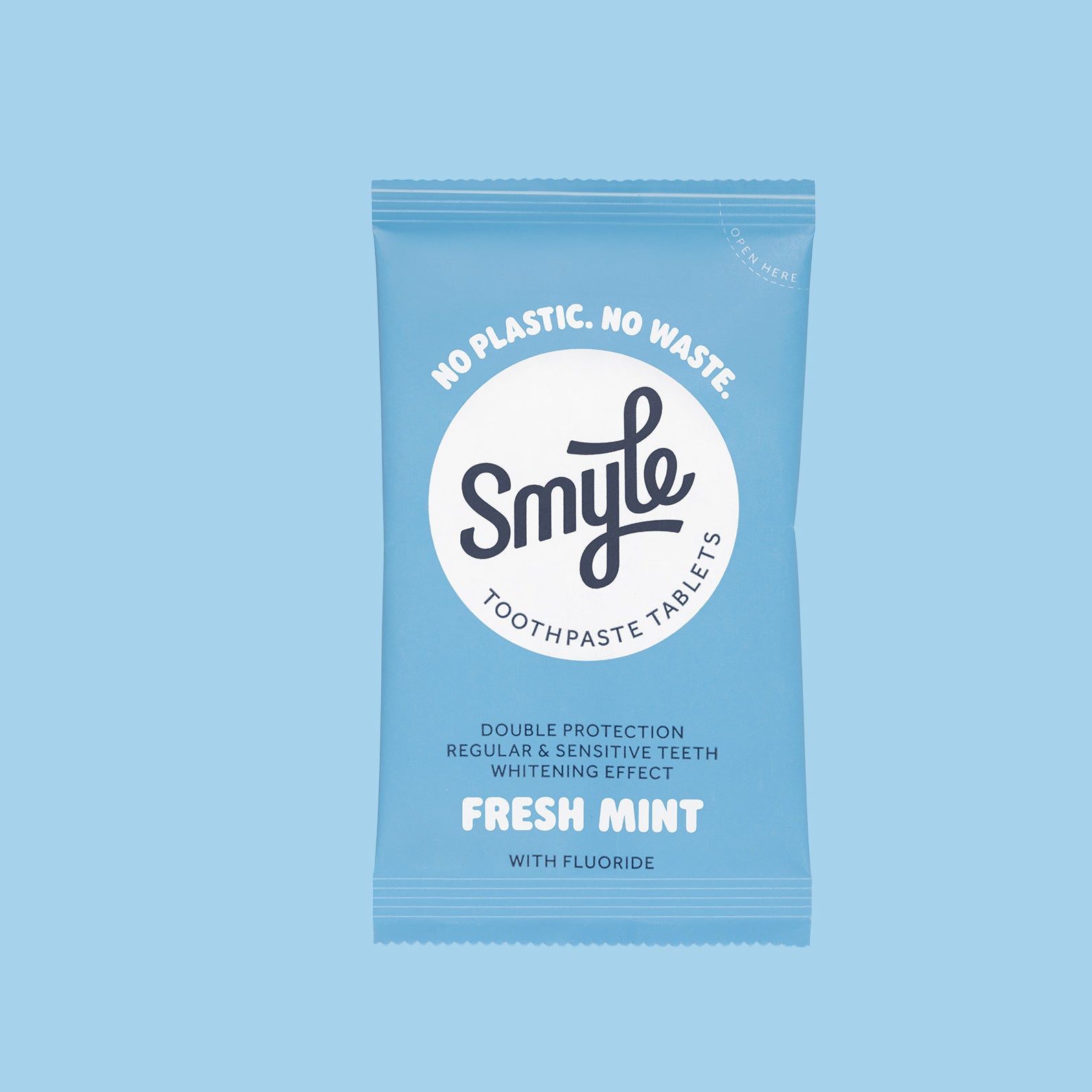
- Make the switch to Smyle. Our toothpaste tabs and liquid toothpaste are guaranteed microplastic-free—so you can brush smarter, not harsher on your health or the planet.
FINAL WORD
Microplastics are persistent, pervasive, and quite frankly, absurd—especially in toothpaste. With evidence mounting on how they harm both the planet and us, clinging to convenience at the cost of health is no longer justifiable.
Smyle is here to change the script: fun meets facts, without the plastic fluff. Choose a toothpaste that loves your smile and the planet.
SOURCES
- 87 % of leading cosmetics and oral-care products contain microplastics
🔗 https://www.plasticsoupfoundation.org/en/news/almost-9-in-10-products-from-major-cosmetics-brands-contain-microplastics - Microplastics detected in human blood, organs, and with inflammatory and hormone-disrupting effects
🔗 https://nypost.com/2024/12/18/health/hidden-danger-can-cause-infertility-colon-cancer-lung-problems - Microplastics added to toothpaste as cheap abrasives—still widely used
🔗 https://oceanblueproject.org/discover-harmful-microplastics-in-toothpaste-and-how-to-avoid-them
- U.S. ban effective since 2017, but industry loopholes persist
🔗 https://www.theguardian.com/environment/article/2024/aug/23/india-should-consider-ban-on-microbeads-in-personal-care-products-researchers-say - Most Toothpastes still contain microplastics: https://www.beatthemicrobead.org/myth-buster-toothpaste-still-contains-plastic-ingredients/
- Bioaccumulation of microplastics in decedent human brains https://www.nature.com/articles/s41591-024-03453-1
- Microplastic particles in human blood and their association with coagulation markers
https://www.nature.com/articles/s41598-024-81931-9
- Microplastics found in every human semen sample tested in study
- Detection of microplastics in human tissues and organs
https://pmc.ncbi.nlm.nih.gov/articles/PMC11342020/
- The potential impact of nano- and microplastics on human health: Understanding human health risks.
https://www.sciencedirect.com/science/article/pii/S0013935124004390
 4.6/5.0 | 100,000+ happy customers